Family Roots of my Political DNA
My Grandmother, Elizabeth Hedin, was a constant presence in my life, from my first memories through my marriage to Jenni and beyond. It would be difficult to overstate her impact on me. She was an independent woman of remarkable curiosity, warmth, and generosity. She was also a rock solid, smart, no nonsense, Farmer-Labor Democrat.
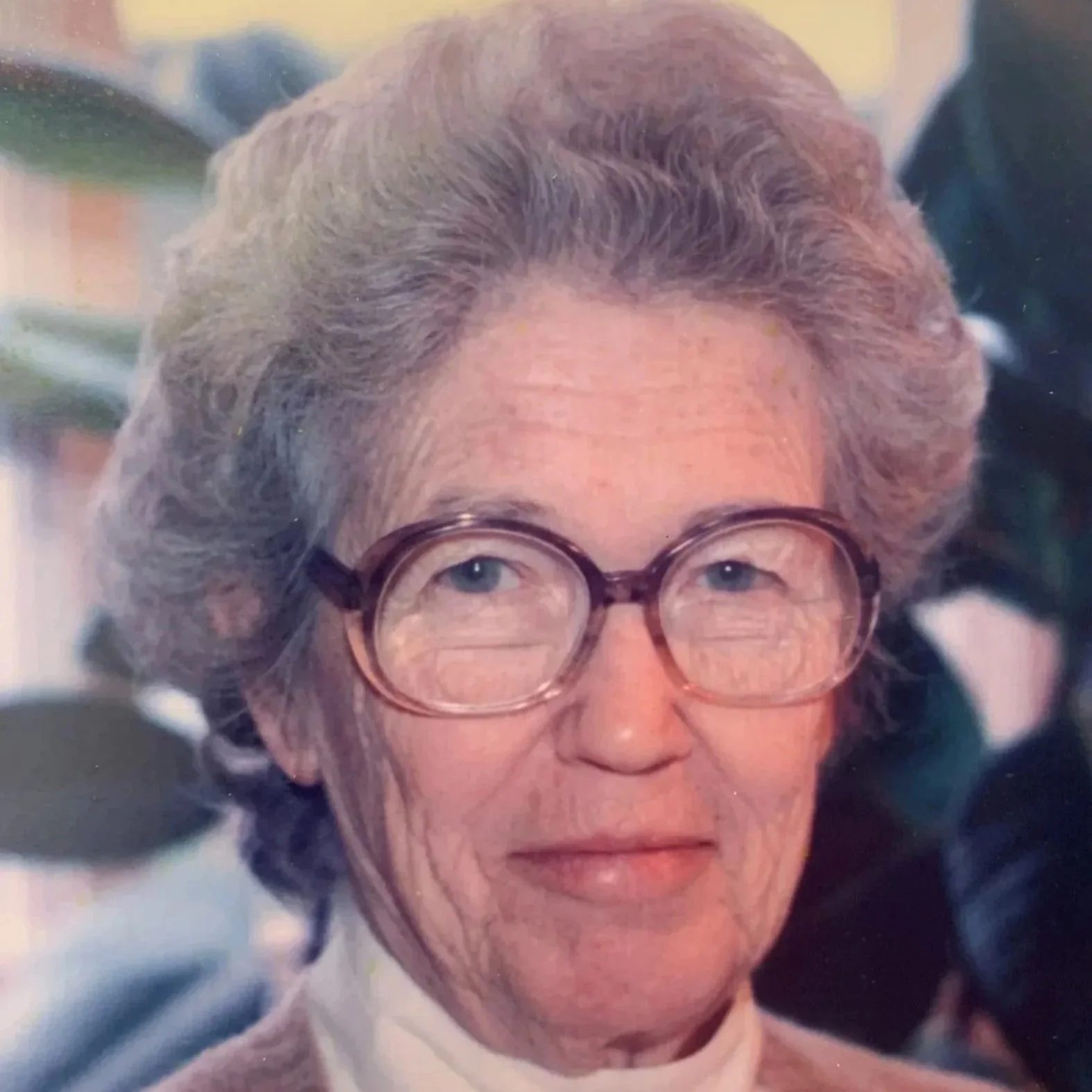
Jack’s grandmother, Elizabeth Hedin.
My grandmother was the first woman ever elected to the Red Wing City Council, around 1970. As a youngster visiting the house in Red Wing, I recall her talking about what she was working on in the community. She talked about supporting downtown businesses in the face of big box store development in Burnside. She talked about energy conservation. She talked about integrating leaders from the Prairie Island community into Red Wing decision making. My grandmother walked the walk 50 years ago, on the very same issues that are important to me NOW as a Senate candidate.
After she died in 2004, my uncle unearthed an article from the Red Wing Republican Eagle (newspaper), maybe from the early 1970s. In it, Grandma is cited as casting the lone dissenting vote on a road paving project because the pavers would not commit to paying prevailing union wages. DAMN! Imagine the steel spine it took to sit in that smoke filled Council room. The ONE woman present, and stick your neck out for what’s RIGHT.
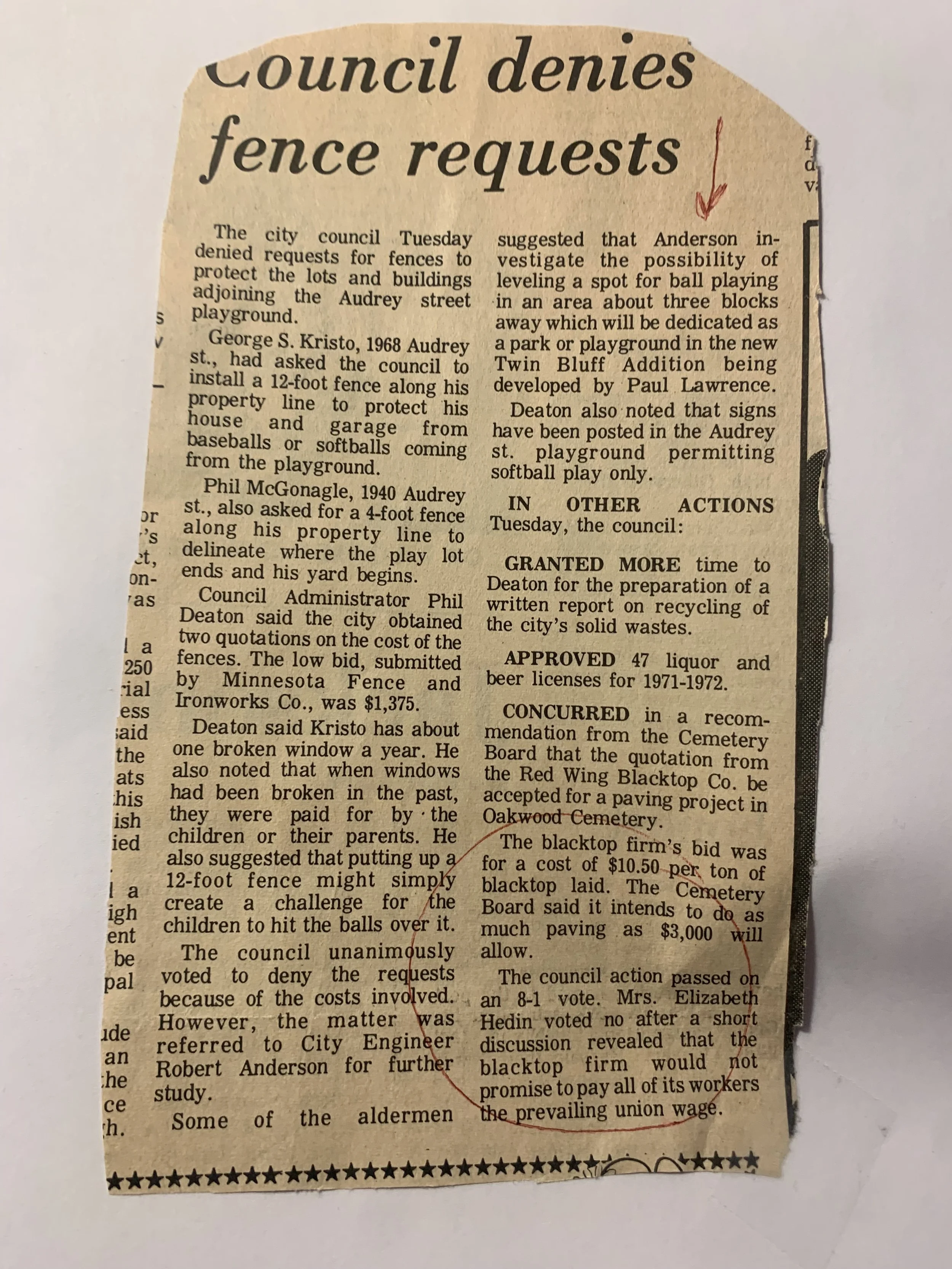
Newspaper highlighting city council votes.
My grandmother was a powerhouse.
Her legacy inspires me today. Likewise her father, my great grandfather. This man was born in a dugout house on the family homestead in Featherstone Township near Red Wing in 1862. He spent 28 years on the homestead before going off to the University of Minnesota, earning a degree in plant physiology, and becoming an early proto-extension agent. This man spent years doing other things, inventing, traveling the country, before returning to SE Minnesota to live out his days.
I know all this, and a LOT more, because my great grandfather self published a memoir called The Seventh Reader in 1941, shortly before his death. AP was a contemporary of Aldo Leopold, and was working on the very same things as Leopold, just west of the Mississippi. The Seventh Reader describes how it felt to grow up on the “primeval” high grass prairie and oak savannah, to see the first steam threshers arrive on them landscape, to see how pioneer farming degraded the soli and land, even as it provided a livelihood for Scandinavian settlers like him. In the book, my great grandfather describes why he and his lifelong partner Lydia, planted over 41,000 trees on and around their farm in Red Wing. DAMN!!
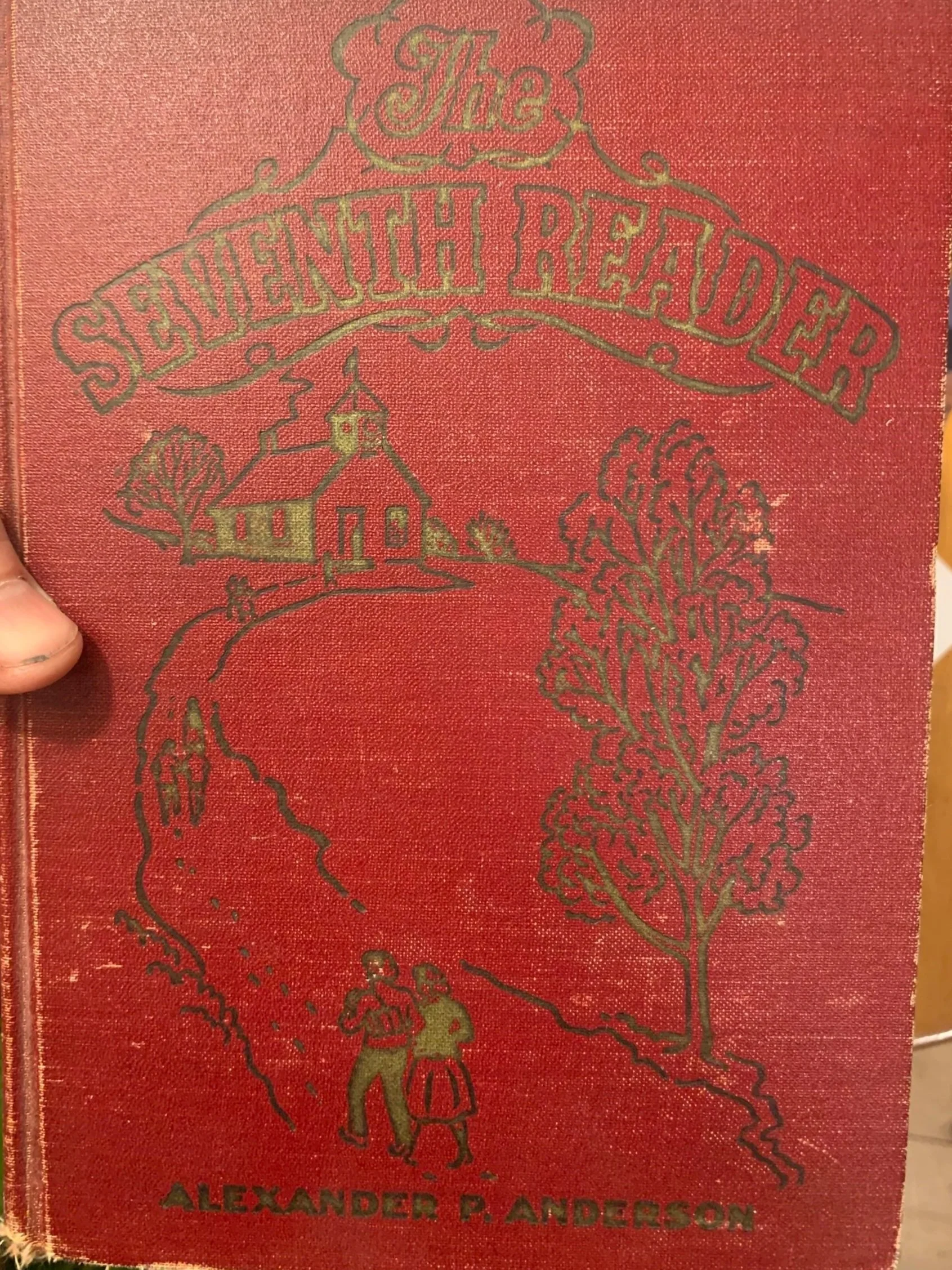
Copy of the Seventh Reader.
As an idealistic, super impressionable 22 year old I discovered this book, and it changed my life. Every wonder where the name Featherstone Farm comes from? Now you know.
It was decades later that I connected the dots, and realized that my great grandfather was born precisely 31 days before the largest mass execution in our nation’s history: the hanging of 38 Dakota warriors in Mankato on December 26, 1862. This connection has tempered my understanding of his life and legacy, to be sure. Big time. But that is a subject for a future post.